Volatile Organic Compounds in Breath
Breath as Metabolic Biomarkers.
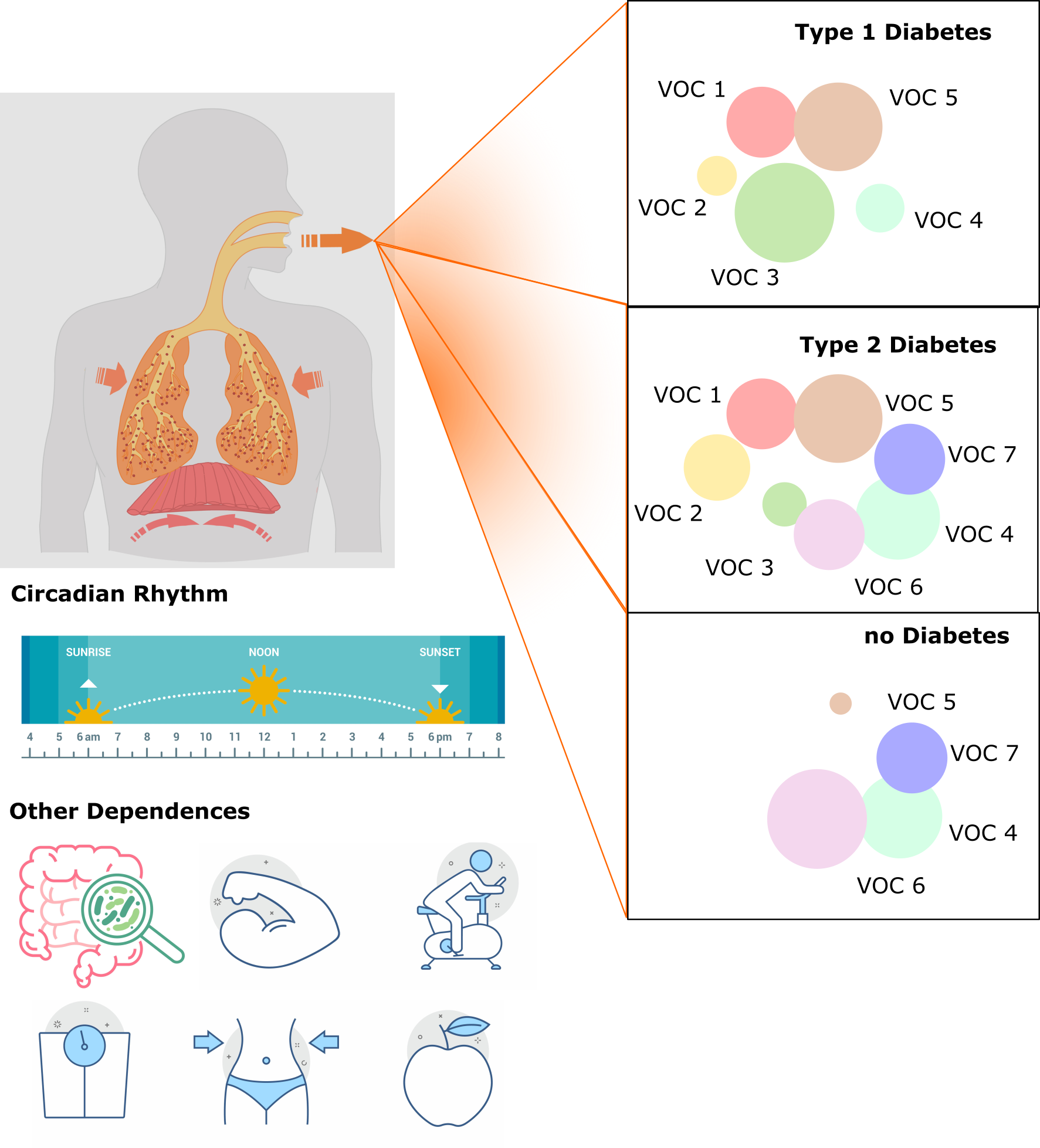
Our research explores the diagnostic potential of volatile organic compounds (VOCs) in human breath as non-invasive indicators of metabolic health. VOCs are emitted by the body and reflect ongoing physiological and biochemical processes. Breath, as a rich and easily accessible matrix, contains a wide range of VOCs that can provide insights into key metabolic pathways, including glucose regulation and microbiota-related metabolism.
We aim to identify distinct VOC patterns and investigate their associations with blood glucose levels, body composition, circadian rhythms, and microbiota profiles — both in individuals with diabetes and in healthy controls. Our broader goal is to contribute to the development of non-invasive, real-time diagnostic tools for personalized metabolic monitoring.
This research area includes clinical studies such as our current project registered under NCT05933616 and new investigations into circadian VOC dynamics and their interaction with microbiota in the context of metabolic disorders NCT05984979.
Prof. Markus Laimer
Prof. Maria Balmer
Scattolo BM, Nicolier C, Balmer ML, et al. Clinical applicability of breath measurements for detecting disturbances in systemic glucose metabolism: a systematised review. J Breath Res. 2026. doi:10.1088/1752-7163/aea638
Nicolier C, Kerber D, Bissoto A, et al. Alignment-free convolutional neural network classification of glycemic states in type 1 diabetes from GC–IMS breath spectra. Sci Rep. 2026. doi:10.1038/s41598-026-64471-2
Nicolier C, Rothenbühler M, Balmer ML, et al. Daytime circadian patterns of exhaled volatile organic compounds in adults without and with type 1 and type 2 diabetes: protocol for an exploratory observational study. BMJ Open. 2026; 16(4):e113892. doi:10.1136/bmjopen-2025-113892
Nicolier C, Künzler J, Lizoain A, et al. Detection of hypoglycaemia in type 1 diabetes through breath volatile organic compound profiling using gas chromatography–ion mobility spectrometry. Diabetes Obes Metab. 2024; 1-8. doi:10.1111/dom.15944
Funded by the Diabetes Center Berne and Burgergemeinde Bern